History
Over 200 years of faith in the village.
A story that begins with a mill-worker's prayer meeting in 1814, and is still being written today. Charfield Christian Centre is a church plant from several churches in the area — Cromhall Chapel, Wotton Baptist, and Kingswood Congregational.
The Beginnings
Around 1814, Samuel Povey — a workman at Mappin Long's Mill — started a prayer meeting at the mill on weekday evenings. Those prayers grew into preaching, and neighbouring ministers began coming to preach at the services regularly.
About ten years later, a friend in the neighbouring village of Charfield Green (then an open common, now the area near the Railway Tavern) opened his house for Sunday prayer. Again, prayer grew into regular preaching. Although the meeting place was a humble cottage, people flocked to it for around thirty years. Friends from the Wotton-under-Edge Tabernacle also preached in a cottage lent by Samuel Long, a local mill owner.
As the village population grew and attendance increased, the cottage became too small. The friends had talked of building a proper chapel for years, until a new arrival in the village urged the Christian community to take immediate action.
The first chapel
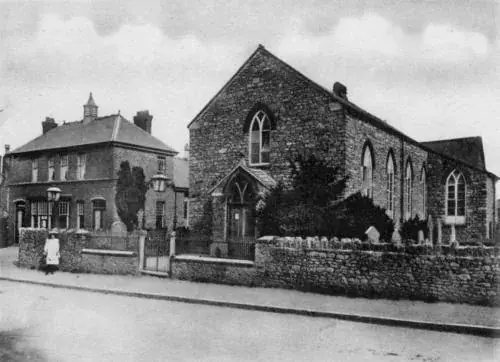
With assistance from Rev Richard Knell of Wotton Tabernacle, and generous land and quarry rights donated by the Earl of Ducie, the chapel became a reality. The foundation stone was laid by Paul Long on 28 July 1846. By Christmas Day 1846, Rev Knell opened the completed chapel.
The Lord's Supper was first administered on 24 October 1847, when 26 communicants gathered — members drawn from the neighbouring churches at Wotton and Kingswood, who formed the nucleus of the new congregation.
The entire cost — chapel, vestry and furnishings — was around £290, raised entirely by voluntary contributions, with no public collection at the opening.
The full story
A timeline of the chapel and centre
-
c.1814 — A prayer meeting at the mill
Samuel Povey begins a weekday prayer meeting at Mappin Long's Mill. Neighbouring ministers begin preaching at the services — the first stirrings of a Christian community in the village.
-
c.1824 — Cottage meetings begin
A friend in Charfield Green opens his home for Sunday prayer. The meetings grow into regular preaching; though the cottage is humble, people come in numbers for around thirty years. Samuel Long also lends a cottage for services connected with the Wotton Tabernacle.
-
28 July 1846 — Foundation stone laid
Paul Long lays the foundation stone of the new chapel, on land given freely by the Earl of Ducie, with stone quarried from his lordship's land. Rev Richard Knell of Wotton Tabernacle has been instrumental in making it happen.
-
25 December 1846 — Chapel opened
Rev Richard Knell opens the chapel on Christmas Day. The total cost of around £290 is met entirely by voluntary contributions — not a penny from a public collection.
-
24 October 1847 — First Lord's Supper
26 communicants — drawn from the churches at Wotton and Kingswood — gather for the first Lord's Supper, forming the nucleus of the new congregation. A Sunday School is established with 70 children and 12 teachers. Weekday services run Tuesday and Thursday evenings; a writing school and Bible class meet on Monday evenings.
-
1854 — Schoolroom added
A schoolroom is built as an extension of the chapel, later used as a day school run by a mistress for infants.
-
1870 — Stephen Walter
Stephen Walter, one of the church's founders, dies after serving as its gratuitous pastor for 22 years. He is buried in the chapel graveyard.
-
1887 — Chapel restored
The interior is restored at a cost of £153 15s 2d — including heating, new roof and lamps — raised in full before the reopening service on 29 September 1887. A small organ costing 37 guineas is installed the following September, again fully paid for in advance.
-
1893 — Schoolroom extended
Following pressure from the Education Department, the schoolroom is extended to meet government requirements at a cost of £180. Mr A.W. King donates £100 towards the work. The extended school opens debt-free on 30 September 1893.
-
1901–02 — New organ and King's Hall
On the death of Augustus William King of Melrose House, the chapel receives a legacy of £200 for a pipe organ. An organ chamber is built and the chapel reopened on 18 September 1901; the organ opens on 19 March 1902. King also bequeaths £600 to build King's Hall — a temperance and community hall that becomes a hub for village life for decades, used for weddings and all kinds of events.
-
Post-WWII — William Baker
William Baker moves from being pastor of Cromhall Chapel (where he served for over 30 years) to become pastor of Charfield Chapel. There is a rich network of preaching between the chapels at Charfield, Cromhall and Kingswood, and the Tabernacle at Wotton-under-Edge. Baker is buried in the chapel graveyard.
-
2007–2013 — Rescue and rededication
By 2011, King's Hall — over a century old — had stood empty for eight years and required prohibitive expenditure to restore. The chapel sanctuary itself had been in such disrepair that the congregation had met in the back room for five years. New trustees appointed in 2007 set about saving the building.
The solution: a developer (Woodstock Homes) builds 16 homes on the chapel's one-acre field (with King's Hall demolished to create access from Wotton Road), in return for £150,000 of repairs to the chapel — central heating, a new kitchen, office and storage, disabled access and new chairs — plus the gift of two three-bedroom houses for rental income. The Rededication of Charfield Congregational Church takes place on 12 October 2013, attended by almost 100 people. The building goes on to host lunches for the elderly, a Sunshine Club, a youth club, Christmas shoeboxes for children in poorer countries, and regular church services.
-
2020 — COVID closure
As the congregation had gradually dwindled and many moved away, Charfield Chapel closes during the COVID-19 pandemic and does not reopen.
-
10 September 2023 — Reopened as Charfield Christian Centre
David and Sue Frampton — who had lived in Charfield since 2014 and previously served as missionaries with WEC International in Africa and the Middle East — enquired with the Congregational Federation for permission to reopen the building after it closed during COVID. With new trustees, a new name and a renewed sense of purpose, Charfield Christian Centre reopens its doors. Regular informal interactive Sunday services begin, followed quickly by coffee mornings and Sunshine Tots. The graveyard wall, which had fallen down, is beautifully rebuilt; roof repairs and a general restoration make it once again a bright and welcoming space.
-
September 2025 — Davina joins as Evangelist & Joint Pastor
Davina arrives from Spain to serve as Evangelist and joint Pastor alongside David and Sue, bringing experience as an ordained minister, former Headteacher, and qualified counsellor and psychotherapist.
-
Today — The story continues
Sunday Café Church, Monday coffee mornings, Tuesday Sunshine Tots and Bible Study, and occasional film nights keep the doors open through the week. The history of Charfield Christian Centre is not finished — it will go on as long as people in the area want it.
In the chapel yard
A Commonwealth war grave in the chapel yard
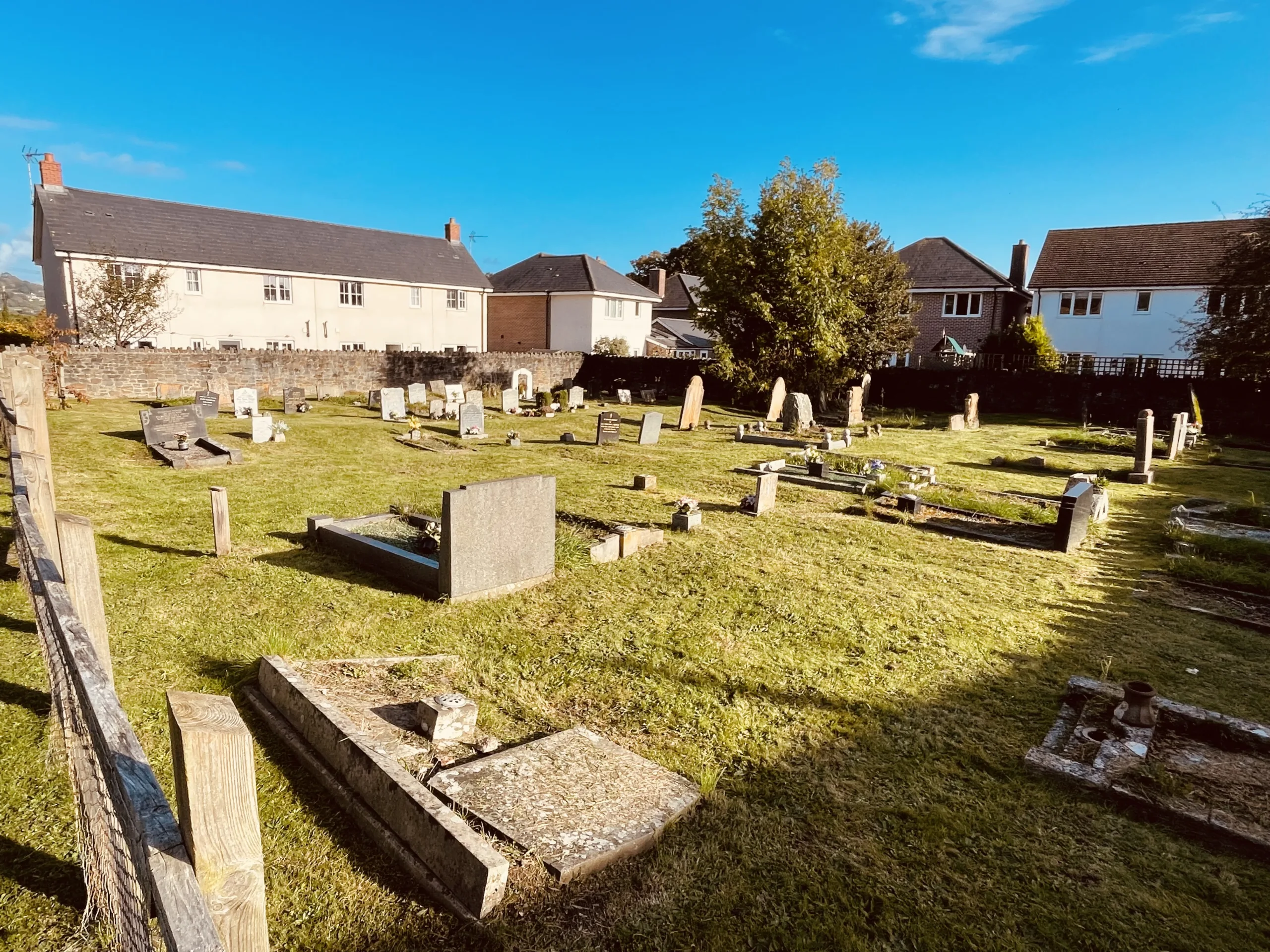
Behind the building, the chapel yard is where several of the people in this story are buried — Stephen Walter and William Baker among them. It is also where the church keeps one Commonwealth war grave, cared for on behalf of the Commonwealth War Graves Commission.
Gunner A. W. Young, service number 16509, of the Royal Marine Artillery aboard HMS Queen Elizabeth, died on 1 December 1920 aged 20 and is buried here at grave reference 2. 30. He was the son of James and Eliza J. Young of Mill House, Charfield. The inscription on his headstone also remembers his brother, Lance Serjeant F. E. Young of the Gloucestershire Regiment, killed in action on 2 December 1917.
He is the one identified Commonwealth casualty recorded in this chapelyard, and his record is public:
Come and see it for yourself
If you haven't been inside for some time — or ever — why not come along to a coffee morning, a Sunday service, or one of our film nights and see what the building (and the community in it) looks like now?